Analytics · BDA · Phuket apartment market
What is the real rental yield of Phuket apartments in 2026?
How much a unit earns
What a Phuket apartment actually earns
The average one-bedroom apartment in Bang Tao earns about $10 700 net a year at ~66% occupancy — a summary across 53 listings in five complexes (AirDNA, June 2026). The spread between complexes is wide and driven not by size but by positioning: the nightly rate varies twofold, while occupancy holds in a 65–68% band across the board.
| Complex | Listings | Occupancy | ADR | Revenue/year | Profit | RevPAR |
|---|---|---|---|---|---|---|
| Cassia Residence | 16 | 65,9% | $117,9 | $27 583 | $15 171 | $75,6 |
| Allamanda | 4 | 68,5% | $101,4 | $23 846 | $13 116 | $65,3 |
| Skypark | 17 | 65,1% | $76,0 | $17 373 | $9 555 | $47,6 |
| Diamond | 13 | 65,3% | $66,6 | $15 720 | $8 646 | $43,1 |
| ZCape | 3 | 64,6% | $52,5 | $12 395 | $6 817 | $34,0 |
| Average / total | 53 | 65,9% | $82,9 | $19 383 | $10 661 | $53,1 |
Occupancy — share of nights booked · ADR — average nightly rate · Revenue/year — gross annual revenue · Profit — net annual income (≈55% of revenue) · RevPAR — revenue per available night, = ADR × Occupancy.
Sample averages · Bang Tao, 1-bed
What a sample of 53 operating apartments shows
Yield on purchase
What ROI real units for sale actually deliver
Overlay these rental incomes onto real sale prices and the calculated ROI works out to 3–7% a year on the secondary market and ~3–5% on off-plan builds. We matched 22 secondary-market units and 17 off-plan builds against the rental yield of their own complexes.
Examples
Working out the yield on specific units
We take a real sale listing (FazWaz), the real rentals of that same complex (AirDNA) and work out the yield step by step. 5 secondary units and 5 off-plan builds — switch tabs and swipe through.
Allamanda Laguna · 1-bed, 79 m²
$405 000 → ROI 3,2%Sale listing — FazWaz
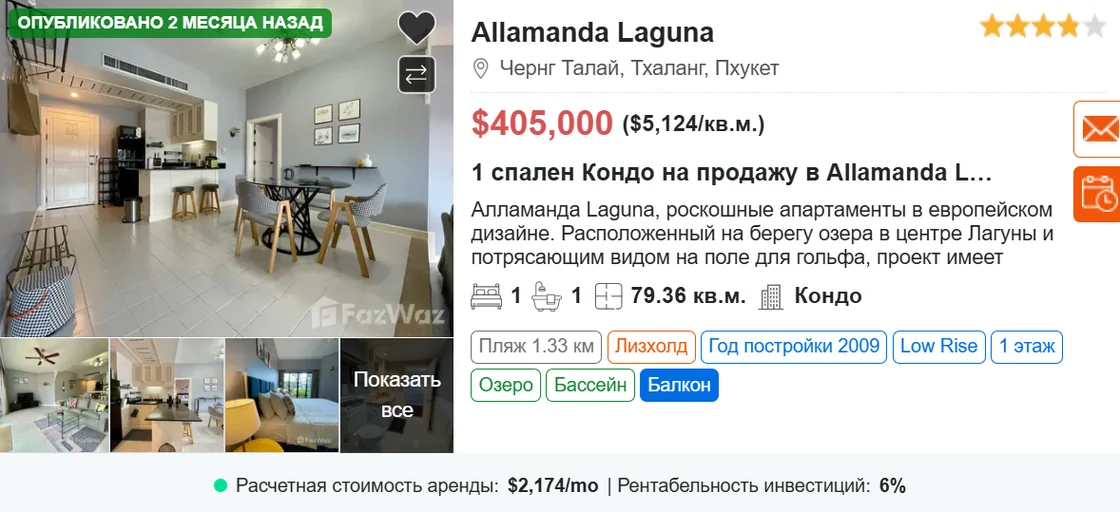
Rentals — this complex's listings on AirDNA:
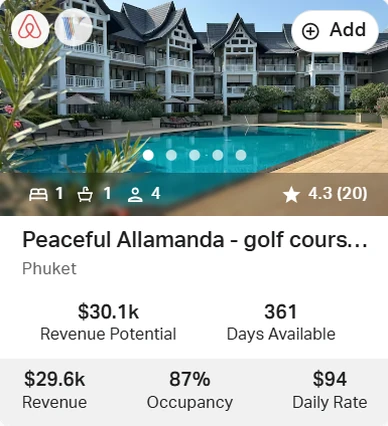
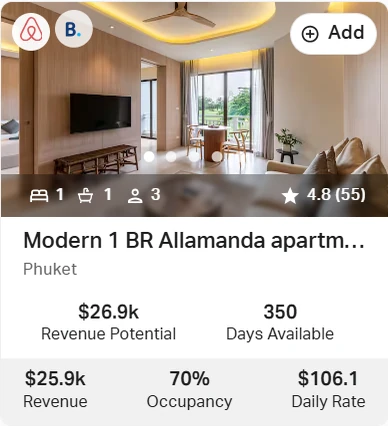
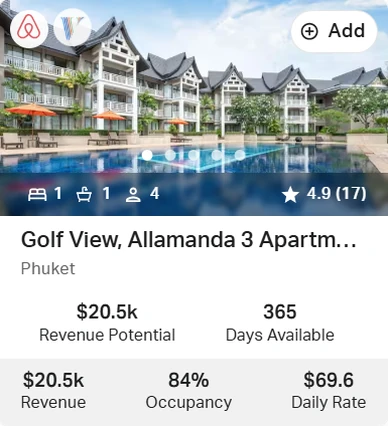
Average across 4 Allamanda listings. Click → Airbnb.
How we calculate
Premium unit, large floor area: 3,2%. A high entry price gives the lowest yield.
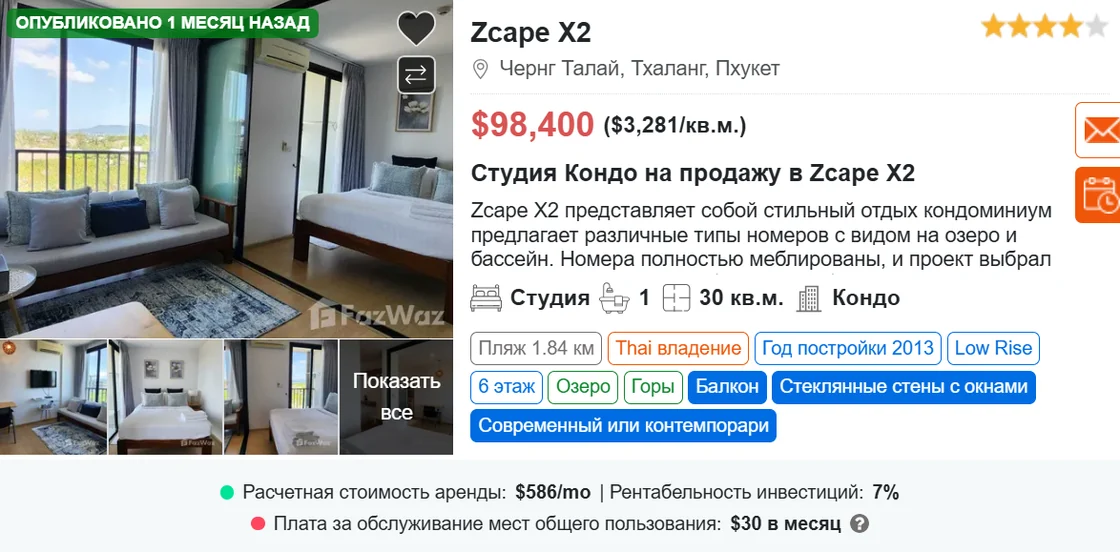
Allamanda calculation — in the spreadsheetZCape X2 · studio, 30 m²
$98 000 → ROI 7,0%Sale listing — FazWaz
Rentals — this complex's listings on AirDNA:
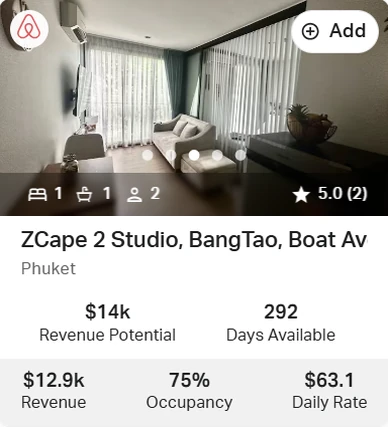
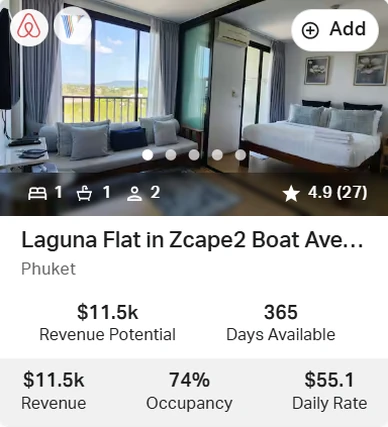
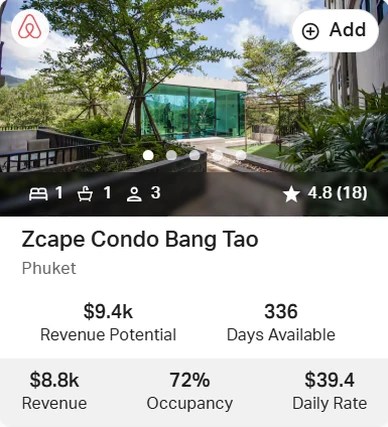
Average across 3 ZCape listings. Click → Airbnb.
How we calculate
A budget studio: 7,0% — higher than premium in percentage terms, but with a low rental rate and weak liquidity.
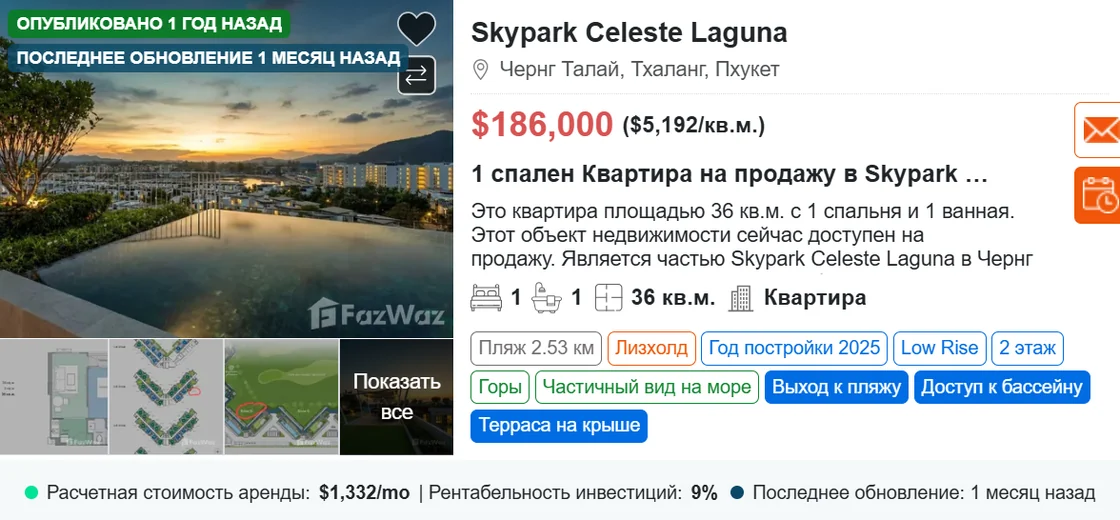
ZCape calculation — in the spreadsheetSkypark Celeste Laguna · 1-bed, 36 m²
$186 000 → ROI 5,1%Sale listing — FazWaz
Rentals — this complex's listings on AirDNA:
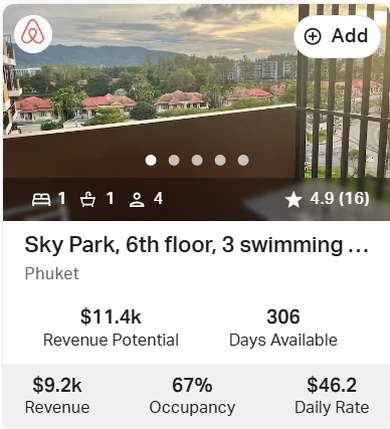
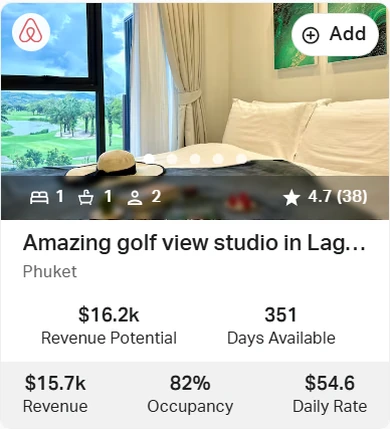
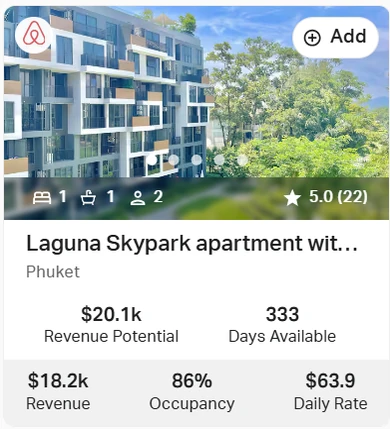
Average across 17 Skypark listings. Click → Airbnb.
How we calculate
Newer and pricier — 5,1%. The entry price is higher, so the yield comes in below the budget options.
Skypark calculation — in the spreadsheetDiamond Condominium · 1-bed, 33 m²
$139 000 → ROI 6,2%Sale listing — FazWaz
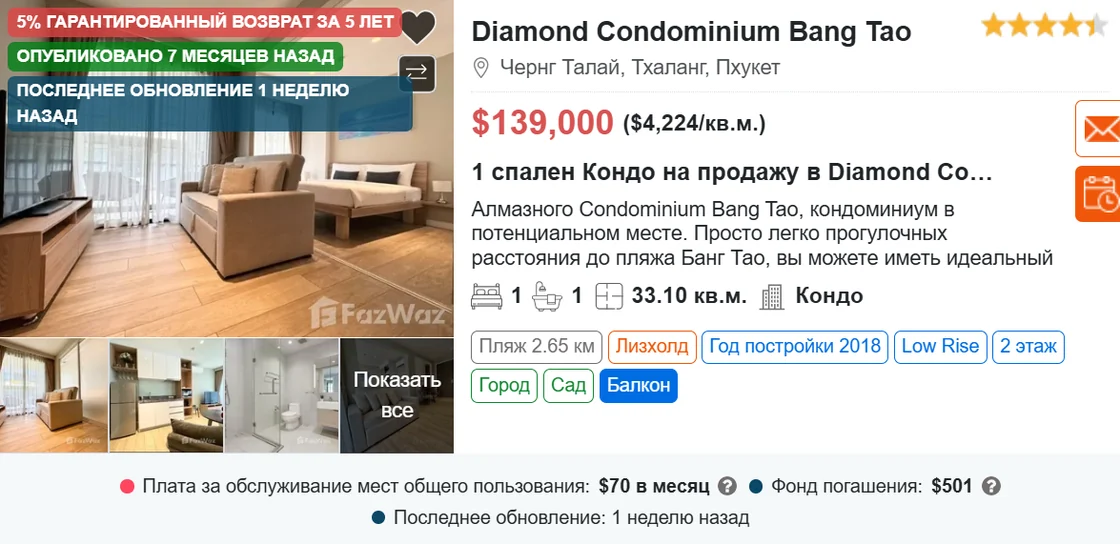
Rentals — this complex's listings on AirDNA:
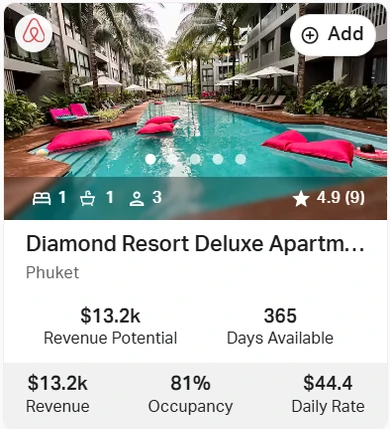
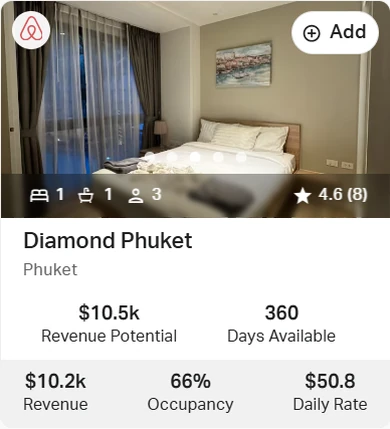
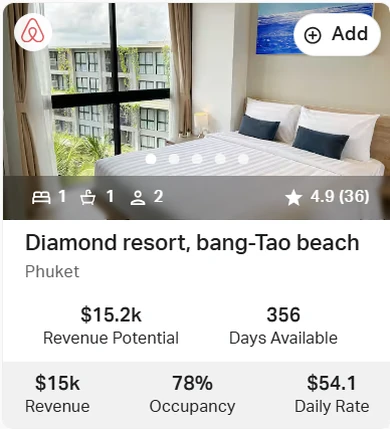
Average across 13 Diamond listings. Click → Airbnb.
How we calculate
Mid-market: 6,2%. Cheap to get into, but the rental rate is modest too.
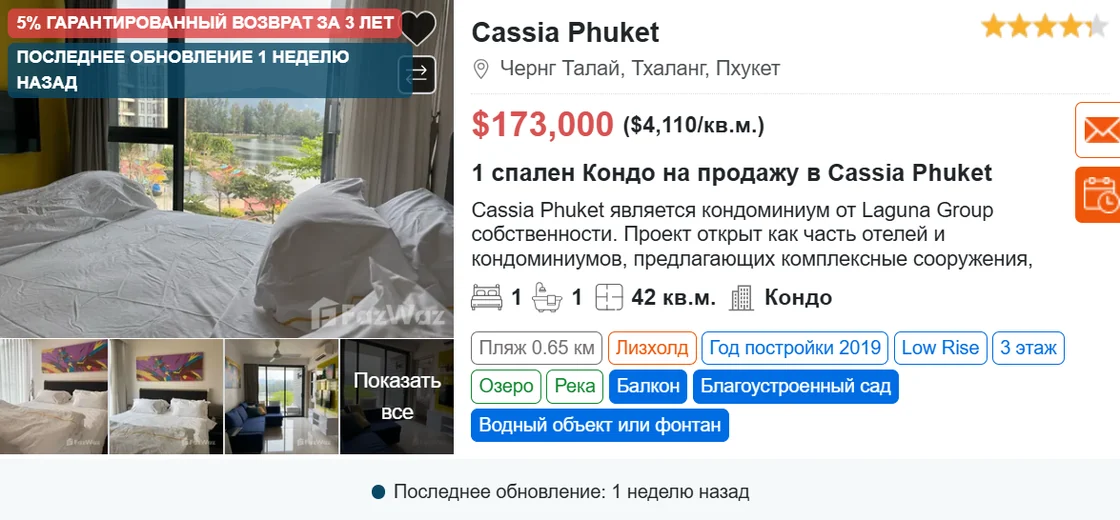
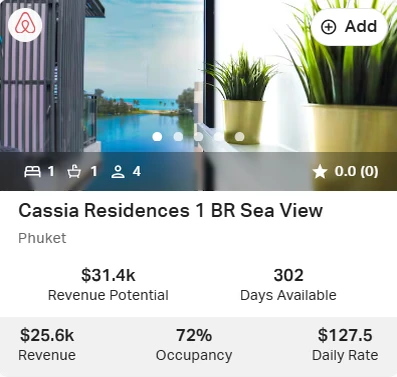
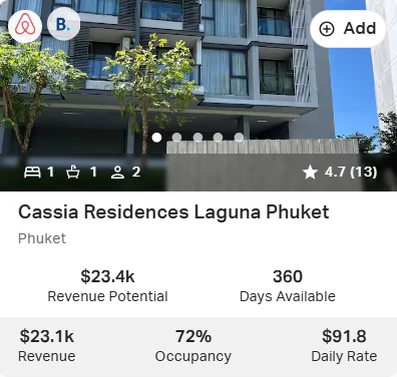
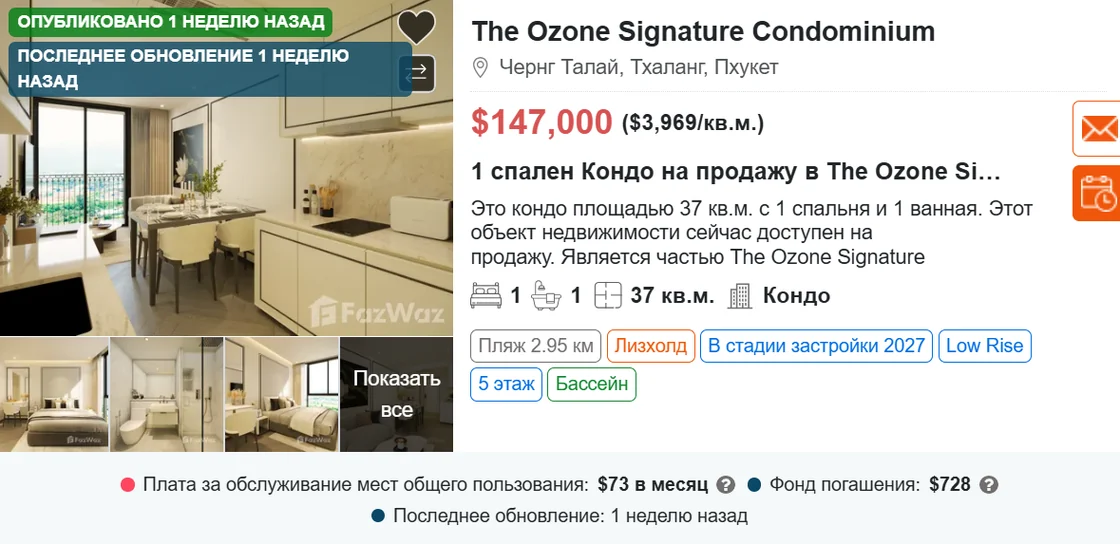
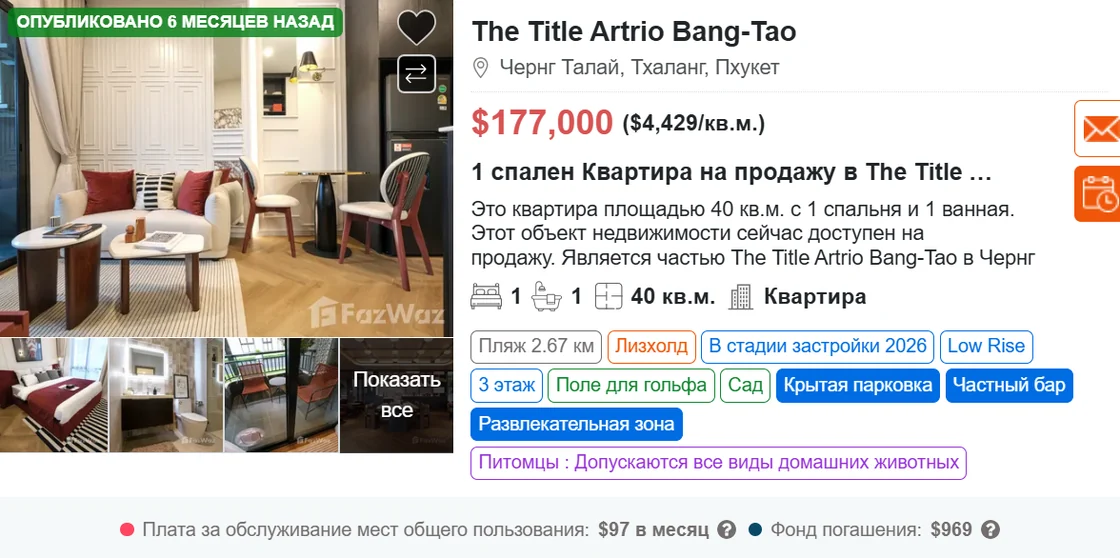
Diamond calculation — in the spreadsheetCassia ("Cassia Phuket") · 1-bed, 42 m²
$173 000 → ROI 8,8%Sale listing — FazWaz
Rentals — this complex's listings on AirDNA:
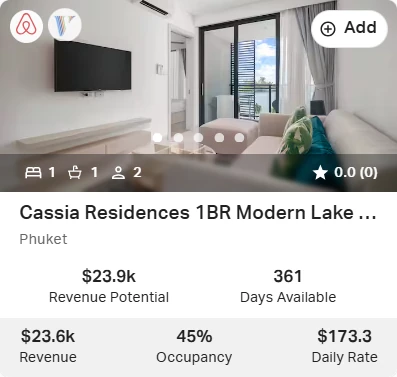
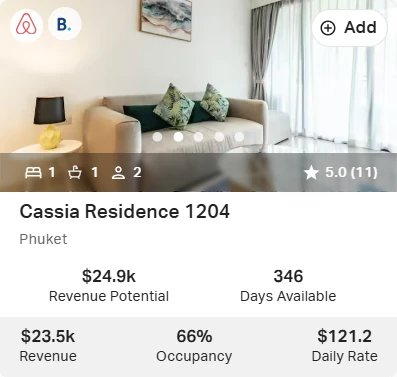
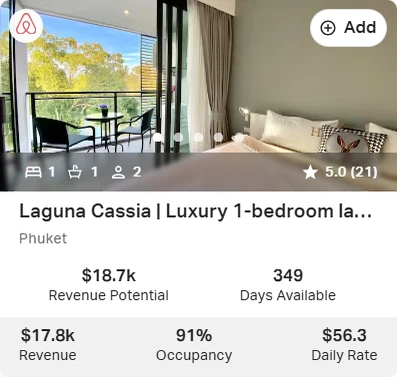
Average across 16 Cassia listings (occupancy 45–91%). Click → Airbnb.
How we calculate
The cheapest Cassia — and the highest-yielding in percentage terms: 8,8%. But it's a compact, older unit that's harder to resell.
Cassia calculation — in the spreadsheet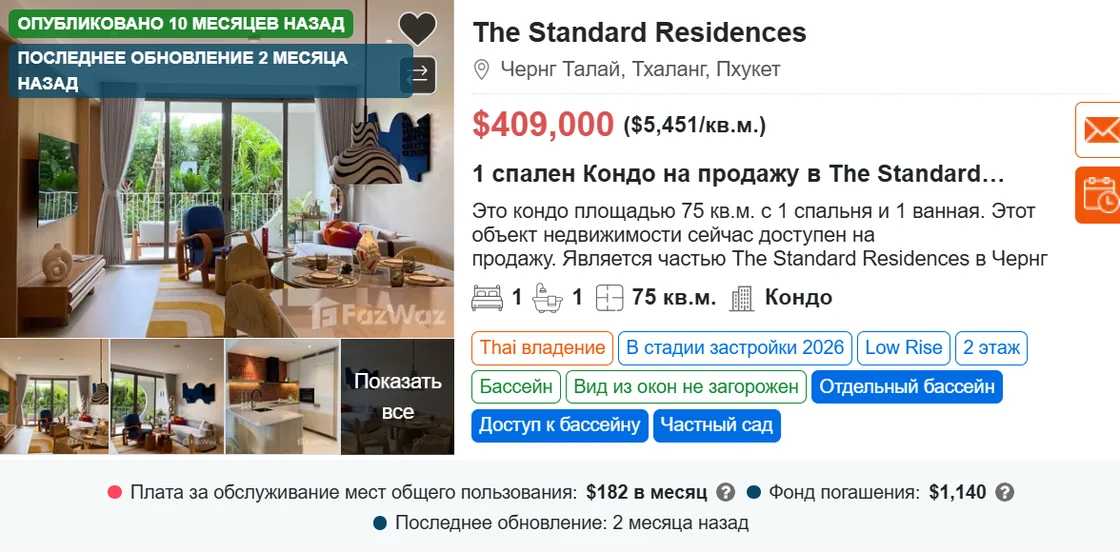
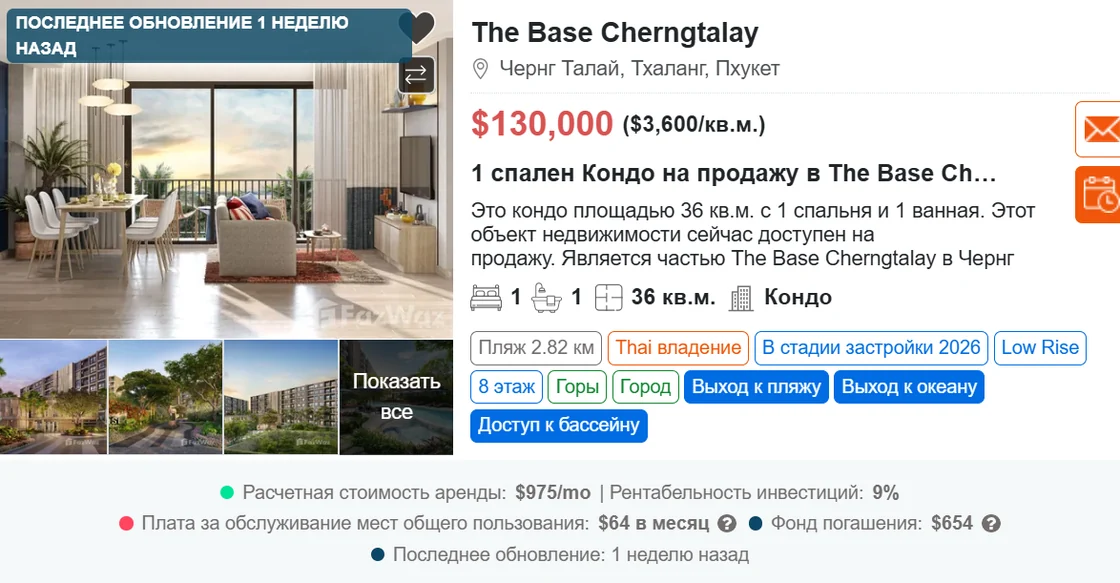
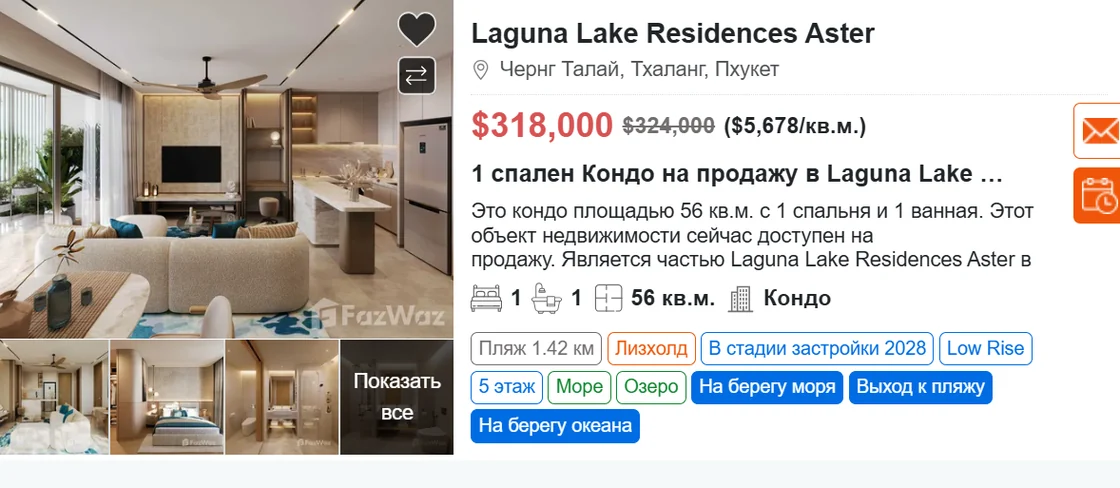
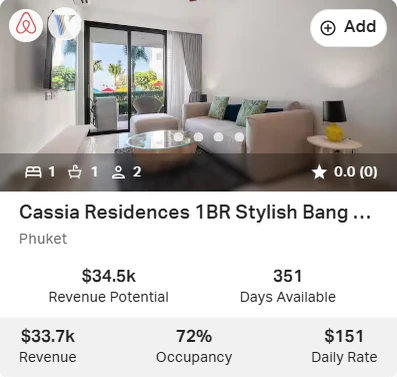
Across all 10 examples the real yield runs from 3% to ~9% a year (most often 5–6%), not the 10%+ developers promise. Cheap studios return more in percentage terms but are worse on liquidity; premium is the reverse.
Why not 10%
Why the yield is lower than promised
Because honest market math doesn't reach 10% even on the best properties. One-bedroom units rent for $50–60 a night on average, occupancy holds at around 70% on an annual basis — that's the segment's revenue ceiling. At entry prices of $120–250K (some units go for $650K+), the arithmetic caps out at 3–7%.
The developers we spoke with gave no data-backed basis for their yields: as a "financial model" they send a table of figures or a single listing on Booking — with no verified occupancy and often 30–40% above real rental rates. That's a marketing showcase, not proven yield.
Supply and resale
Supply is growing faster than demand
Record new-build completions weigh on both rentals and resale.
~14,7K new condos in 2024
In a single year (per Colliers). The unsold inventory is on the order of 10K units, and the sell-out period has grown to ~28 months.
+35% active listings in a year
The number of short-term rental properties is growing at double-digit rates (AirDNA data), and a significant share of what's under construction hasn't hit the market yet.
Thousands of competing listings
When you go to resell, you become one of many. Completed units often sell for less than the developer's off-plan price.
Seasonality
When Phuket actually earns
Income on Phuket is sharply seasonal. By daily RevPAR from AirDNA the peak falls in December–February, the high season runs November–March, and from April to October income drops several times over: ~$84 in January versus ~$21 in May — nearly fourfold. So the "December" figures developers use to show yield can't be stretched across the whole year.
Demand
Why demand is under pressure
Demand is concentrated in price-sensitive markets. The bulk of arrivals to Phuket come from Russia, China and India — markets sensitive to the average spend. In 2025 the Chinese inflow dropped sharply, which heightens occupancy risk against a backdrop of rising supply.
Comparison
Phuket or Bali for investment?
It's not about the island — it's about the product and the entry price.
Mass-market apartments don't deliver high yields anywhere: 3–7% on Phuket, 6–8% on Bali (Canggu). High yields come from concept and view villas: in Ubud and Bingin real properties deliver 12–14% net (per management-company reports).
| Segment | Real yield |
|---|---|
| Apartments, Phuket | 3–7% |
| Apartments, Bali (Canggu) | 6–8% |
| Concept villas, Ubud / Bingin | 12–14% |
The real yield of Bali — a breakdown of 11 properties
Bali yields — per management-company reports, a breakdown across 11 real properties.

The question isn't "Phuket or Bali," it's "mass-market apartments or concept villas." The money is in the latter, and the entry price decides it.
FAQ
Frequently asked questions
Short answers with figures from the sample.
What is the real rental yield on Phuket?
Do developers really promise 10% or more?
Which apartment delivers the best yield?
Is it worth buying a Phuket apartment to rent out?
How does Bali differ on yield?
Want a property that actually generates income?
BDA analyses the market using a proprietary base of 30 000+ properties and selects Bali properties with clear yield and liquidity — without showcase promises.