
Bukit 2025: rental market up +52% and the investor risk

Analytics · BDA · Bukit district · 2024 → 2025

Bukit 2025: the rental market grew 52% — but does that guarantee yield for the investor?

In short Bukit posted the strongest momentum among Bali's districts in 2025: short-term rental turnover grew 51.8% — from $92.6M to $140.6M, supply grew 54.9%, and occupancy dropped just 5 pts. But the district averages are deceptive. Bukit is not a single market, and an investor's result is determined by the choice of a specific location and segment within it — not by the district's overall trend.
DTDmitrii Totoev, founder of BDA Updated 11 June 2026

District data

How much did the short-term rental market in Bukit grow in 2025?

Bukit is Bali's fastest-growing district by turnover in the 2024–2025 cycle. Total short-term rental turnover in the district grew 51.8% — from $92.6M to $140.6M. This is the largest gain among the island's key districts.

Bukit is Bali's southern peninsula, known for its cliffs, surf beaches and a well-developed dining scene. In recent years it has been developed intensively, filling up with villas and boutique hotels. In the 2025 supply mix, Bukit accounts for 3,593 listings (16%) of the 21,961 properties across the island — the third-largest cluster after Canggu (22%), on par with Ubud (14%).

Surf beach and cliff of the Bukit district on the Bali peninsula — rocks above the ocean
Bukit — cliffs, surf beaches and a fast-growing rental market

Bukit · 2025

The most pronounced growth momentum among Bali's districts

$140.6M
Bukit's rental market turnover in 2025
+51.8% YoY
3,593
active listings — 16% of all Bali supply
+54.9% YoY
2,336
actually booked properties — real demand
+45.0% YoY
59.7%
district average occupancy — a moderate correction amid supply growth
−4.9 pts YoY

Market mechanics

Why did turnover grow 52% while occupancy fell only 5 points?

Because supply growth was accompanied by almost equal growth in real demand. With supply up nearly 55%, district occupancy fell just 4.9 pts — from 64.5% to 59.7%. That's a moderate correction: tourist demand absorbed most of the new supply.

The proof is the trend in actually booked properties. The number of villas that genuinely hosted guests grew 45% (from 1,610 to 2,336). The market is expanding not just "on paper": both the number of built villas and the number of actual bookings are rising.

A key pattern of a mature market: supply grows faster than turnover. When supply grows faster than revenue, yield increasingly depends on the quality of the specific project and the standard of management — not on the overall trend.

Turnover growth by villa segment
Bukit · revenue gain 2024 → 2025, by number of bedrooms
1 bedroom · $13.1 → $23.1M+76.3%
2 bedrooms · $20.6 → $35.0M+69.8%
4 bedrooms · $14.3 → $22.0M+53.7%
3 bedrooms · $24.3 → $35.9M+47.9%
6+ bedrooms · $12.5 → $15.2M+21.5%
5 bedrooms · $7.7 → $9.3M+20.7%
The most affordable segment grew the most: studios and 1–2-bedroom villas. Larger formats grew noticeably more slowly.
The drop in occupancy amid rising turnover and a growing number of booked properties reflects not falling demand, but a gradual intensification of competition and higher standards expected of a property. Demand is growing — but it is spread across a larger number of villas.

The core thesis

Why doesn't a district's growth guarantee a successful investment?

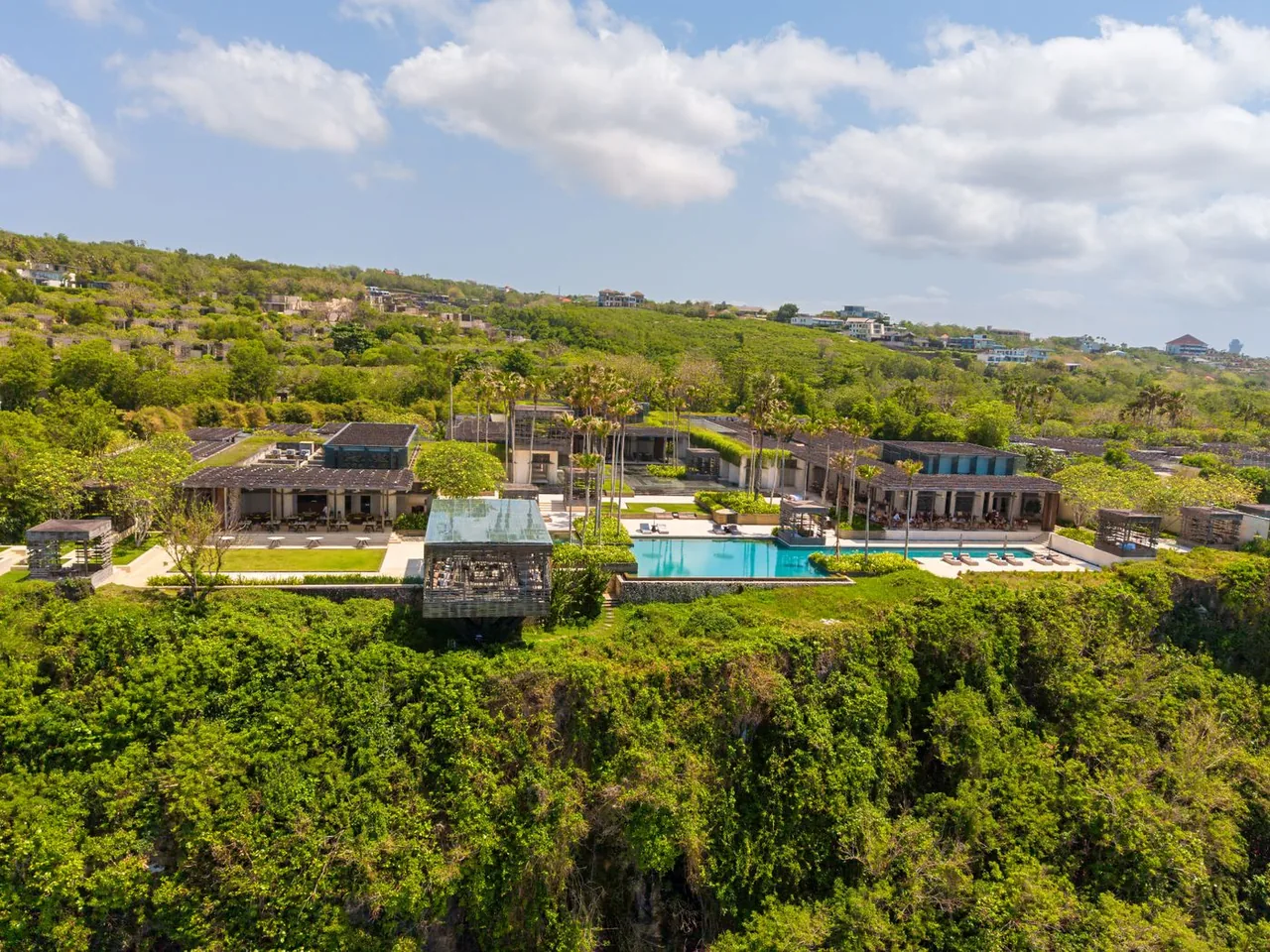
Premium villa with an infinity pool on a Bukit cliff overlooking the ocean — Ungasan, Bali
Part of the turnover gain comes from the launch of new concept-driven projects

Because Bukit is not a single market, but several locations with fundamentally different investment logic — and district averages hide that difference. Some Bukit locations have already passed the peak of affordability and operate under intense competition. Others are only now building out infrastructure and offer an earlier entry point with room to grow.

The figure "+51.8% turnover" describes the district as a whole. But an investor doesn't buy a "district" — they buy a specific property in a specific segment. An average growth of 52% doesn't mean any villa will deliver that result: part of the gain is driven by the launch of new concept-driven projects that pull demand away from dated properties. When supply grows faster than revenue, a weak product loses the competition even in a rising market.

The report's conclusion is direct: an investment result in Bukit is determined not by the district as a whole, but by the precision of choosing a location and segment within it. "Bukit grew 52%" is not an investment thesis — it's a starting point for analysis.

District comparison

Bukit, Canggu or Ubud — where is the entry point in 2025?

It depends on the investor's strategy. Bukit delivers the highest turnover growth (+51.8%) with sustained demand, but the district is uneven, and the result is determined by the precision of choosing a location within it.

Canggu is the largest and most mature market ($194.6M turnover, 61.8% occupancy): demand is predictable, but the entry cost has risen substantially — this is a cash-flow market, not a capital-growth one. Ubud is forming a distinct wellness demand vector that doesn't compete with the coast, with turnover +29.9% at a still-affordable entry cost.

Market turnover by district
2025 · million USD
$140.6
Bukit
$194.6
Canggu
$86.3
Ubud
Metric (2025 vs 2024)BukitCangguUbud
Supply growth (Listings)+54.9%+32.4%+39.6%
Occupancy change−4.9 pts−4.5 pts−7.0 pts
Booked-property growth (demand)+45.0%+23.9%+24.3%
Turnover growth (Total Revenue)+51.8%+33.9%+29.9%
Market turnover 2025, abs.$140.6M$194.6M$86.3M

Source: BDA analytical report "Bali Short-Term Rental Market 2024–2025".

Fast growth, uneven market

The island's most pronounced momentum: turnover +51.8% (to $140.6M) with demand up 45%. But Bukit is not a single market: inside the district are locations with different prices and demand, and the result depends on the precision of choosing a specific location and segment.

Turnover 2025$140.6M
Stable income, expensive entry

The largest and most predictable market: $194.6M turnover (+33.9%) with stable 61.8% occupancy. Demand is reliable, but the entry price is already high — the district delivers cash flow from rentals, not asset-value appreciation.

Canggu — separate analysis
Turnover 2025$194.6M
A distinct market, early stage

Growing 29.9% (to $86.3M) and still far from saturation. A distinct wellness market that barely overlaps with the coast: the entry price is still below its potential, and demand for villas with a strong concept outpaces supply.

Ubud — separate analysis
Turnover 2025$86.3M

In Bukit, what wins is not the choice of island, nor even the choice of district, but the precision of choosing the location, segment and product quality.

What this means for the investor

A district's growth is the backdrop, not a yield guarantee

1
A district's growth is a backdrop, not a guarantee. The +51.8% turnover is driven in part by new concept-driven projects that pull demand away from weak properties. Where supply grows faster than revenue, a product without a concept loses.
2
Location matters more than the "district average". Within Bukit, locations that have already passed the peak of affordability sit alongside those only now building out infrastructure. The very same district average hides properties with very different economics.
3
Yield is calculated by scenarios, not by rate. A showcase ADR inflates expectations; real yield is set by occupancy and operational efficiency. This is exactly where analytics ends — and expertise begins.

FAQ

Frequently asked questions

Short answers about investing in Bukit — with figures from the BDA report.

How much did rental turnover in Bukit grow in 2025?
According to the BDA report, total short-term rental turnover in Bukit grew 51.8% — from $92.6M in 2024 to $140.6M in 2025. This is the largest turnover gain among Bali's key districts.
Did villa occupancy in Bukit fall?
Yes, but moderately: average occupancy dropped 4.9 percentage points — from 64.5% to 59.7%. This happened against nearly 55% supply growth, meaning demand absorbed most of the new properties.
Is Bukit a single market?
No. Bukit consists of several locations with different investment logic: some have passed the peak of affordability and operate under intense competition, others are only now building out infrastructure. District averages don't reflect this difference.
Which is better in 2025 — Bukit, Canggu or Ubud?
It depends on the strategy. Bukit — the highest turnover growth (+51.8%) with an uneven district; Canggu — the largest and most predictable market ($194.6M), but an expensive entry; Ubud — a distinct wellness demand with a still-affordable entry point (+29.9% turnover).
DT
Dmitrii Totoev

Founder of BDA (Bali Developers Accelerator). In real estate since 2012, $350M+ in deals across four markets (Russia, Dubai, Turkey, Bali), $50M+ in Bali. Yield calculations are built on a proprietary database of 30,000+ Bali properties (sources: AirDNA, management companies, direct owner reports). The methodology does not overstate yield or understate risk.

Market data source: BDA analytical report "Bali Short-Term Rental Market 2024–2025".
Last updated: 11 June 2026

Want to pick a location in Bukit precisely?

BDA analyzes the market using its proprietary database of 30,000+ properties and calculates real yield by segment — from choosing a location within Bukit to the product concept and entry price.

Request an analysis from BDA